12 Science Art Ideas for Kids
12 Science Art Ideas for Kids: Science and art are two worlds that, when brought together, create a universe of creativity, discovery, and fun. Science art is a fantastic way to help kids understand scientific concepts while allowing their imagination to run wild.
From hands-on experiments to exploring nature’s wonders, these science-based art projects not only entertain but also educate.
If you’re looking for creative science art ideas for kids that engage their brains and inspire their artistic sides, you’re in the right place.
Below, I’ll walk you through 12 science art ideas that will leave kids excited, curious, and ready to explore the world around them.
Table of Contents
12 Science Art Ideas for Kids!
1. Volcano Eruption Art
One of the most exciting and dynamic science art projects is making a volcano eruption art. Imagine the looks of awe when kids see a baking soda volcano erupting in front of their eyes, creating a colorful mess of fizz and foam. The best part? You can incorporate this into a painting.
Start by creating a volcano shape out of clay or paper-mâché. Once it’s dry, have the kids paint the volcano with dark, earthy tones, and then “erupt” it using baking soda and vinegar mixed with food coloring.
The eruption not only provides an exciting visual experience, but it also helps kids understand chemical reactions, making it a fun and educational project.
Encourage the kids to create a background scene, like a forest or city, which gets “covered” in the eruption, offering a lesson in both science and creativity.
2. Nature Print Art
Have you ever wondered how you can capture the beauty of the outdoors without having to paint it? Nature print art is the perfect way for kids to explore the textures of leaves, flowers, and trees while also learning about natural science.
To create nature prints, gather a variety of leaves, flowers, and twigs. Lay the plants flat on a piece of paper and have the kids use crayons or watercolors to press down on the leaves and draw their outlines.
When the kids remove the objects, they’ll be left with a beautiful nature print that mimics the patterns of the natural world.
This project teaches kids about botany and helps them better understand how plants and trees grow.
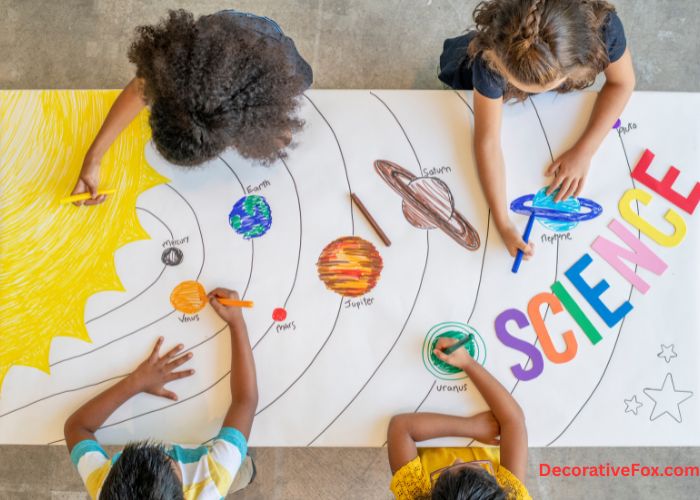
3. Solar System Model
Exploring the solar system through art is a way to spark kids’ curiosity about space. A solar system model can be made using different materials such as styrofoam balls, paint, and glitter.
This hands-on activity can help kids learn about the planets in our solar system while also letting their creativity flow.
Start by painting each planet with its distinctive colors. Use glitter to represent stars, and cut out paper moons or other celestial bodies to enhance the scene.
Once the planets are painted, string them up in a 3D model with wire or yarn to hang them in a circular shape.
This project can become a great opportunity to teach about the distances between planets, the sizes of celestial objects, and how the solar system works. It’s an out-of-this-world combination of art and astronomy.
4. Density Art with Liquids
If you’ve ever been curious about the different densities of liquids, this is the perfect art project for you. It’s simple, fun, and provides a hands-on lesson in science and color mixing.
Start by filling a clear glass with different colored liquids such as water, oil, dish soap, and corn syrup. Make sure to pour the liquids in slowly and gently to allow them to layer on top of each other. Each liquid will form a layer due to its varying density.
The visual effect is absolutely beautiful, and kids can experiment with mixing different colors or creating a rainbow of liquids. This science art idea demonstrates how density works and helps kids understand why some liquids float on top of others.
5. Chromatography Art
Here’s a science experiment that doubles as an art project chromatography art. This technique allows kids to separate the different pigments in markers or inks, revealing a beautiful spectrum of colors.
Take a coffee filter and cut it into a circular shape. Then, let the kids draw a dot in the center of the filter using a variety of colored markers.
Next, hold the edge of the filter in water and watch the colors travel up the paper, separating into their individual hues.
Chromatography art is not only visually appealing, but it also demonstrates the concept of solubility and how different pigments interact with water. It’s a fun, hands-on way to learn about chemical processes and explore color theory at the same time.
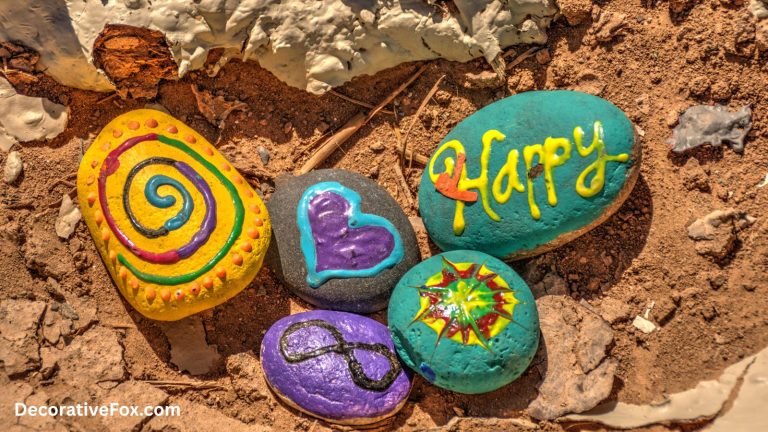
6. Rock and Mineral Art
Did you know that you can make beautiful art with natural rocks and minerals? This is a perfect project to help kids explore the world of geology.
Gather a collection of rocks, minerals, and crystals and let the kids paint or decorate them with bright colors, glitter, or markers.
Not only will they create stunning pieces of art, but they’ll also learn about the different types of rocks and minerals, their properties, and how they form.
For an added twist, you could set up a rock hounding activity where kids go outside to collect their own materials, then bring them back to create their artwork.
7. Microscopic Art
In a world filled with tiny, unseen wonders, microscopic art lets kids explore the microscopic world in an accessible way. Have the kids look at different objects under a microscope or magnifying glass such as leaves, insects, or even fabric and then recreate the images they see in their art.
For example, kids can make their own interpretations of cells, bacteria, or even viruses, drawing or painting them based on the intricate details they observe under magnification.
This project helps kids better understand biology and microscopic life while giving them the freedom to create what they see through the lens of science.
8. Fossil Art
Fossils offer a fascinating glimpse into the past, and fossil art allows kids to explore paleontology while engaging in a hands-on activity. You can use clay, playdough, or salt dough to create molds of real or imaginary fossils.
Press small objects like shells, leaves, or plastic dinosaurs into the dough to create impressions, and then let it dry.
Once hardened, kids can paint over the fossils or even brush them with shimmering gold or silver paint to mimic real fossilized specimens.
This activity is not only fun but also educational, teaching kids about prehistoric life and the process of fossil formation.
9. Magnetic Art with Iron Filings
This fun science art project involves the use of magnets and iron filings to create art that’s as scientific as it is beautiful.
By sprinkling iron filings on a piece of paper and holding a magnet beneath it, kids can see how the filings align to form patterns.
Kids can move the magnet around, creating dynamic shapes or abstract art. This project is a fantastic way to learn about the power of magnetic fields and the movement of particles, all while creating unique and visually stunning artwork.
10. Rainbow Jar with Liquids
A rainbow jar is a perfect art project to illustrate the concept of liquid layering and the vibrant beauty of color. Start by using different liquids such as colored water, oil, and honey to fill a clear jar.
Each liquid has a different density, so they will layer beautifully on top of each other, creating a rainbow effect.
This hands-on experiment gives kids a visual representation of how liquids with different densities behave. You can discuss the science of fluid dynamics while the kids create their rainbow of colors.
11. Plant Growth Observation Journal
What if the act of growing plants could turn into an art project? Creating a plant growth observation journal allows kids to document the growth of a plant while simultaneously creating art.
Start by planting seeds in clear containers so that the kids can observe the roots and stem growth. As the plants grow, have the kids draw or paint what they see in the journal.
They can document their observations of the plant life cycle and the changes it undergoes.
This project not only teaches about botany and photosynthesis but also allows kids to keep an artistic record of their plant’s journey from seed to sprout.
12. Solar-Powered Art
Why not combine the power of the sun with art? Solar-powered art uses solar paper, which changes color when exposed to sunlight.
Kids can arrange natural objects like leaves, flowers, or even shapes cut from cardboard on the solar paper and leave them in the sun.
After a few minutes, they can remove the objects and reveal sun-bleached designs on the paper.
This process demonstrates how the sun’s energy can be harnessed and utilized, all while making beautiful artwork that’s 100% eco-friendly.
Final Thoughts: 12 Science Art Ideas for Kids!
Science art ideas for kids are a great way to blend education with creativity, making learning about science more hands-on, visual, and enjoyable.
These 12 projects will not only inspire artistic expression but also deepen kids’ understanding of important scientific concepts.
Whether you’re exploring the chemistry of a volcano, the biology of plants, or the physics of magnetism, each project is an exciting step on the journey of discovery.
So grab your paints, markers, and science kits, and get ready to create some amazing science art!